Catholic Contextual urban Theology, Mimetic Theory, Contemplative Prayer. And other random ramblings.

Thursday, 3 August 2017

Sermon at Parish Mass Trinity 7 2017


1 Kings 3.5-12
Romans 8:26-39
Matthew 13.31-33,44-52

This is our third week of parables; but in fact it is the last part of a series of parables that Jesus teaches in one day in Matthew’s Gospel. Taken all together, the parables form a course of teaching that draws us into the deep meaning of the Kingdom of Heaven.
In the previous parables we have learned how not to think, the ways in which our perception is skewed and needs to be transformed in the light of the Kingdom. The Parable of the Sower taught us that life is not limited by death, the resurrection enables us to live with the limitless generosity and hope of Jesus. The Parable of the Wheat and the Weeds warned us against a dualistic mind-set, dividing humanity into “us” and “them”.
To enter the kingdom of Heaven, we have to let go of our previous misunderstandings, to be “transformed by the renewing of our minds” as St Paul says (Romans 12.2). It is only when we have left behind an imagination bounded by death and dualistic thinking that we can begin to grasp what the Kingdom might be.
The mustard seed is a weed that nobody would choose to plant, in fact it was not kosher to sow it among your crops – but that useless weed becomes the Tree of the Kingdom that shelters all. The weed that is cast out is Jesus – a scandal to a dualistic mind-set, but the secret of the Kingdom to those who believe. Jesus is the Kingdom in person – human nature perfectly united with Divine nature in one person, and therefore enacting God’s rule in his life.
We have learned from the parables not to think about “us” and “them” in terms of our fellow human beings. In Jesus, the ultimate dualism is broken down, that which divides God from humanity. The Kingdom of Heaven is Jesus in person, God and humanity can no longer be spoken of as “us” and “him”; there are no longer two, but one.
Like the yeast in the dough, the union of God and humanity in one person is a seemingly small and invisible thing that acts on and transforms everything. The Church – the disciples of Jesus – becomes the dough leavened all through, participating in the union of God and humanity by the grace that works in secret.
Then follow the two little jewels of parables, one sentence each: the treasure hidden in the field, and the pearl of great price. And here we come to the heart of the teaching of the Kingdom.
First of all, note that the Kingdom is something happening. It is not a treasure hidden in a field, or a pearl of great price. It is like someone finding these things. The Kingdom of God is not a still-life picture, but something active and dynamic, an act of discovery and revelation.
We can come across it in different ways. The treasure in the field is something found, seemingly, by accident. Someone just came across it without looking for it. But that discovery changes everything. He sold everything that he had to buy the field.
The pearl, on the other hand, is something that a merchant has been looking for all his life. And this discovery, too, changes everything. He was in search of fine pearls; now, to gain just this one, he sells all that he had.
The Kingdom of God is the discovery that just one thing is worth giving up everything else. What is that one thing? It is the weed that becomes the tree of the Kingdom, the yeast that leavens the whole dough. It is the union of God and humanity, made real in Jesus, the Divine and human in one person, a union extended by grace to all who believe.
The Christian tradition insists that union with God surpasses anything we can comprehend. God is beyond our understanding. We cannot know him by intellectual knowledge, but we can know him by the knowledge of the heart, by love. The way of union passes through the Cloud of Unknowing, forgetting what lies behind and reaching out to that which is before, so that we can know God by love, in the union of the heart. This is exactly the path that the parables trace. The path to union is prepared for us in Jesus Christ, and we enter through our adoption in him, by faith and grace.
But the Kingdom of Heaven is not, of course, individualistic fulfilment. We do not vanish into vague self-absorbed navel-gazing. Quite the opposite. The Kingdom is a society, it is in fact human society as it was meant to be, living out God’s rule because it is living in perfect union with God in Christ. The values of the Kingdom: good news for the poor, the binding up of the broken hearted, setting the captive free, all these are rooted in and flow from the union of God and humanity which is already established in Jesus, and in which we come to share by grace.
The scribes trained for the Kingdom bring out of their treasure what is new and what is old. The discovery of the Kingdom is rooted in the tradition we have received, the scriptures, the law and the prophets. All spoke of it; all proclaimed its values. We have to know the tradition and live it well, in order to inherit the kingdom. But we also have to move beyond, to what we had never guessed. In Jesus, the Kingdom is made real, and its secret heart, the union of God and humanity, is opened to all, a wonderful and unlooked for discovery, the hidden treasure, the pearl of great price.
“Have you understood all this?”, ask Jesus today. The parable of the good fish and the bad, with which Matthew’s gospel ends this day of parables, is a test of that. Have you got the point that the parables have been exposing to us the ways in which we do not understand? Union with God, the secret of the Kingdom, cannot be attained by intellectual knowledge, but only by love; and Jesus opens the heart of that love for us to enter in.
Then, we will be ready for those moments of discovery and recognition that are God’s gift to us as we follow in his way and leave our illusions behind.
Like the merchant who spent his life searching for fine pearls, it can take time and persistence. There’s a story of a hermit on Mount Athos, the monastic centre in Greece, who spent years in his hermitage on a mountain fasting and praying and practicing austerities in his search for union with God. And then one day after a shower of rain he looked out of his cell and saw God in a puddle of water. 
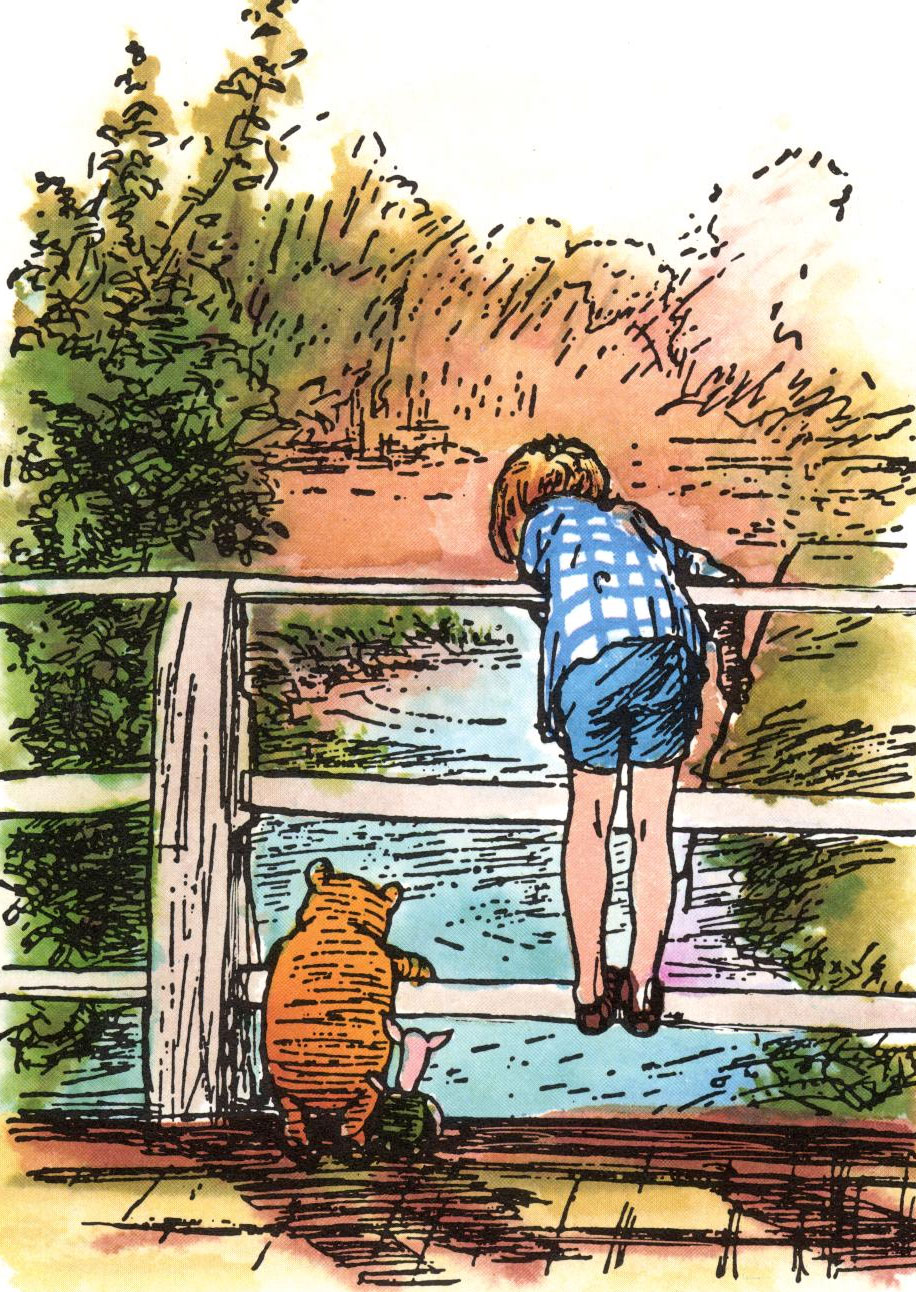
On the other hand, like the treasure hidden in a field, sometimes God catches up with us without us even knowing that we were looking. As that great spiritual master of the 20th Century, Winnie the Pooh, put it, “Sometimes, if you stand on the bottom rail of a bridge and lean over to watch the river slipping slowly away beneath you, you will suddenly know everything there is to be known.”

The parables teach us to be like scribes trained for the Kingdom, rooted in the treasures that are old, the tradition of the scriptures, the law and the prophets, living them well, being transformed by the renewing of our minds. Because that way we will be watchful and ready for the new treasure, the pearl of great price, the secret of the Kingdom in Jesus Christ our Lord.

Saturday, 29 July 2017

Sermon at Parish Mass Trinity 6 2017


Isaiah 44.6-8
Romans 8.12-25
Matthew 13.24-30,36-43

Following on from last week’s parable about the sower, we have another parable about sowing seed, and gathering a harvest. But, as with last week’s parable, we have to be on the alert. Parables are strange, Jesus describes what are at first glance typical scenes from everyday life, but look closely, and there’s always something odd. We are not looking into the world we are used to. Parables jolt us out of the ordinary into a new world where things happen differently.
Once again, as with last week, we have to ask ourselves, “what is wrong with this picture?”
We are to remember that, when Jesus was asked why he taught in parables, he quoted the Prophet Isaiah:
You will indeed listen, but never understand,
and you will indeed look, but never perceive.
Parables are not about explaining simple moral lessons. They are about uncovering for us the ways in which we listen, but do not understand, and look, but do not perceive.
Looking at today’s parable, sowing wheat and dealing with weeds are everyday activities in agricultural communities, very familiar to Jesus’ audience. What is strange, in this parable, is the instruction of the landowner, to let the weeds carry on growing. Any gardeners will know that if you have weeds coming up, you remove them as soon as possible. Weeds spread, and can choke the good plants that we do want to grow. In fact, last week’s parable told us just that! Which just goes to show that parables keep us on our toes.
As with last week, Jesus goes on to explain the parable to the disciples, but, as with last week, doesn’t explain the bit that is really strange, which in this case is why a farmer would allow weeds to grow up with his wheat.
So let’s look back towards the beginning of the parable. “while everybody was asleep, an enemy came and sowed weeds among the wheat, and then went away.”
What is the end result of the enemy sowing weeds? To be sure, the weeds grow, but that is not the end result. It is not the most disruptive thing the enemy has done. Because what then happens is that the weeds grow, and this causes the harvest workers to ask the landowner if they should remove them.
It appears that what the enemy has really sown is the desire to separate the wheat and the weeds. The harvest workers turn out to have a binary mentality – wheat is good, weeds are bad, cast them out! And is this not exactly the mentality that Jesus comes up against again and again? Us and them. We are good, they are bad. Cast the bad people out!
And to this, the landowner says no. If you did that, you would uproot the wheat as well. In other words, you think you can tell the difference between the wheat and the weeds, but I know you can’t. Your binary worldview, us against them, is an illusion.
It is in the end a deadly illusion. The Pharisees and the religious authorities were convinced that they had “us” and “them” right. They were sure they were on the inside, the pure and righteous, and others on the outside, unclean and polluting weeds to be uprooted from God’s field. And the weed they will focus on in the end, the one they will tear out of the field and cast aside, will be Jesus himself.
And this gives the parable a new perspective. Casting people out, identifying victims to destroy, is the seed sown by the evil one. But it is all too easy to think it is the work of God.
Now, to be sure, Jesus does say that “the good seed are the children of the kingdom [and] the weeds are the children of the evil one”, and he speaks indeed of a final separation. But he also says that it will be his business to sort that out, not ours. Just as it is his business to bring the righteous into the kingdom of their Father where they will shine like the sun. And as we can’t for now tell the difference between the wheat and the weeds, well, there may be many surprises in store for us when that happens.
Saint Paul, in the Letter to the Romans this morning, speaks of the “glory about to be revealed to us. For the creation waits with eager longing for the revealing of the children of God”.
If something is going to be revealed, then it is not apparent yet. Until it does appear, we can’t distinguish between the wheat and the weeds. But Paul goes on to speak of a great cosmic resolution of everything: “the creation itself will be set free from its bondage to decay and will obtain the freedom of the glory of the children of God”.
We have to wait, with the whole creation, for the gathering in of the harvest in which, somehow, some way, the whole creation, groaning now in its labour pains, will be set free.
In the meantime, our task is to tend the harvest, not to uproot it, and not to suppose that we know the difference between good and bad.
Of course, we can be confident about those who are children of God. The grace of baptism assures us of our adoption in Christ as children of the Father. And even if we fall into grave sin, repentance will restore us to that relationship, for God is always calling us back to himself. The wheat and weeds in the fields of our hearts will in the end be sorted out by God, if we go on co-operating with his grace.
What we can’t say is who is not a child of God. The Holy Spirit is not contained within the walls of the church, and is at work in the world, giving a myriad secret graces to countless people in ways that are completely hidden from us.
And even in the hearts of those who appear to be furthest from God, whose evil and wickedness seem obvious, who can tell what half-strangled ear of wheat might still be surviving among all the weeds?  There, perhaps, in the end to be snatched out of the burning in to the harvest of the kingdom.
This is not to say that we are to ignore the evil. In the Church, as in society, we are to guard against those who would do harm with proper safeguarding and protection. But we should never despair of God’s grace being at work in anyone, however bleak their situation may appear to us.

So we are not to be lured into the mentality of us and them, insiders and outsiders. We are not to think that it is our task to purify the church. We are to trust in the work of grace, for others no less than ourselves, and leave the final judgement to Jesus. For he is the one who in the end will free creation from its bondage to decay and bring all things into his glorious kingdom. He knows what he is doing, and we can trust him to do it.

Sunday, 16 July 2017

Sermon at Parish Mass Trinity 5 2017

Bible illustrations contributed by Sweet Publishing to Wikimedia Commons

Isaiah 55:10-13
Romans 8
Matthew 13:1-9, 18-23

We are reading through Matthew’s Gospel in the course of this year at Sunday Mass, and today we have reached the point where Jesus begins teaching in parables.
It’s said that a bible student once defined a parable as “a heavenly story with no earthy meaning”. Well, that’s not quite right, but they aren’t “earthly stories with a heavenly meaning”, either. The more you look at them, the more it becomes apparent that parables aren’t simply metaphorical tales that we can just decode.
Parables are strange. Jesus describes seemingly ordinary everyday scenes, but look closely, and there’s always something odd about them, details that don’t fit, things that just aren’t that way, in the world we know: mustard seeds that grow bigger than trees; a prize treasure hidden in a field; a shepherd who abandons ninety-nine sheep to look for one. It’s as though the parable is saying, “what is wrong with this picture?”
The parables are a bit like a Zen koan, those paradoxical riddles that have no answer, such as, “what is the sound of a handclap made with only one hand?”. There is something elusive in the parables which is trying to jolt us into a new way of seeing, a different consciousness.
When Jesus was asked why he taught in parables, he quoted the Prophet Isaiah:
You will indeed listen, but never understand,
and you will indeed look, but never perceive.
The point of a parable, it seems, is not to enable us to understand a simple lesson. It is to bring us up against the fact that we don’t understand. Our not perceiving, not understanding, are part of what a parable is exposing.
It’s as though the parables of Jesus hold up a mirror, and we think we see a distorted image, but actually we are seeing the distortion of our own perception. Jesus is describing how things really are; if it seems weird to us maybe it’s because we have got reality wrong.
Except that with this parable of the Sower, Jesus seems to spoil it all by explaining it. The seed stands for various types of people, and how they respond to the word of the Kingdom. Well, yes. But that doesn’t explain it all. Perhaps Jesus is probing our perception, to see if we will be content with the everyday explanation, content to stay where we are, to look and not perceive, to listen and not understand.
Because one very important thing is not explained in this parable: the Sower. And a very strange Sower he is, too.
This year’s crop of tomatoes is just starting to ripen at home. The ripe fruit is of course the end of a long process. If you grow your own tomatoes you too will have started with a pack of seed, probably quite expensive and with not many seeds in it (holiday buying tip: Italian seed packets are cheaper and have much more seed in them). Now, what did you do with that packet of seed? Did you wander down your garden path, randomly flinging the seed in all directions, onto the stones and into the weeds (though I’m sure none of you has weeds)?
Well of course you didn’t. That would be a waste. Seed has to be looked after, you prepare the seed compost, nurture the little seedlings, protect them from the slugs, plant them up, feed and water them, and so on. So we begin to see what is odd with the parable of the Sower.
This Sower doesn’t seem to know about waste or limited resources, or the risk of throwing away the seed you’ve got in strange places. Now, wheat isn’t quite the same as tomatoes, but it is still odd behaviour as farmers depend for their livelihood on their crops. The seed you sow is what you have to spare from the grain you need to eat and sell. Sow too much, and you’ll go hungry. Sow too little, and you won’t have enough to harvest for next year.
The life we are familiar with is made up of limitations: careful calculation, planning for the future, and very often possessiveness, rivalry, anxiety, fear. Ultimately, it’s about survival, and over it all is cast the shadow of the fact that in the end, after all this striving, we won’t survive. The future we plan so carefully is bounded by death, and we measure out our lives a little at a time from our finite resources, staving off year by year that final limit that we can do nothing about.
But the Sower in the parable doesn’t seem to know anything about this. He wanders along the path, recklessly flinging seed in all directions, without counting it out, without caring where it lands: on the path, on the rocks, among thorns, in the good ground. He inhabits a strange new life which knows nothing of finite resources, of holding on to what’s mine, of rivalry, of death. He has done with these things. In other words, the Sower is one who has been raised from the dead.
The Sower walks on a path that begins in an empty tomb, and leads into the new world of the resurrection, the life that is without limit because it is the life that God lives.
Old calculations no longer apply. “The one who hears the word and understands it bears fruit and yields, in one case a hundredfold, in another sixty, and in another thirty.” It doesn’t matter how much. And in fact even thirtyfold would have been much more yield than any ordinary farmer would have seen in the time of Jesus.
Those who follow Jesus along the path of new life will bear fruit abundantly, and that fruit itself becomes seed that is sown, that bears more fruit in its turn. Jesus the Sower is our model.
Does it matter where we sow our seed? The Lord of the harvest doesn’t seem to think so. If we follow Jesus on the path of new life we become his ambassadors whenever, wherever, we are. We can share our faith whenever God gives us the opportunity.  We are to scatter the gospel seed, but leave the growing of it to God. We can be sure that some will take root and grow. We may not see the fruit, but it’s not our harvest.

Does it matter, whether we bear a hundredfold, or sixty, or thirty? The Lord of the harvest doesn’t seem to think so. All is overflowing abundance. Old calculations, limitations and rivalries have no place in the life of the resurrection. Some churches are bigger than others. Some Christians are more gifted in sharing their faith in words, others in works of charity.  But there is no need to compare ourselves favourably or unfavourably with anyone. If we follow Jesus, we will bear, and sow, the fruit that he wants us to, the fruit of the abundant and limitless life of the resurrection, in our own lives, and in the world around us. And that is more than enough.